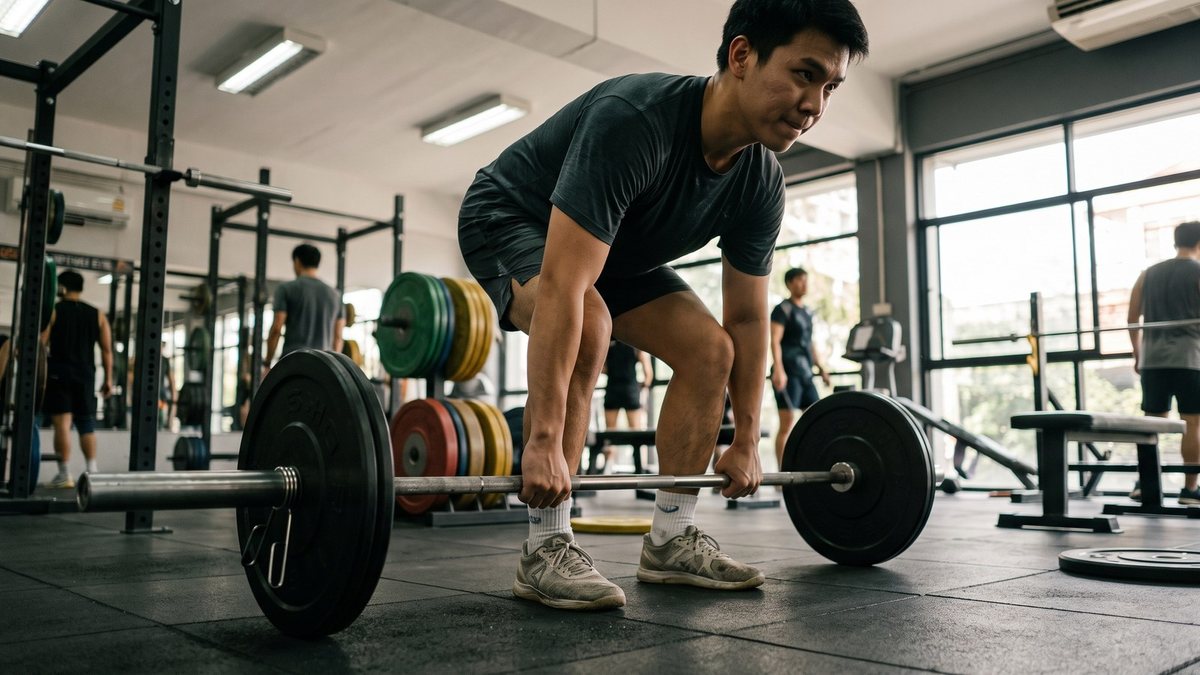
The best training socks for Thai heat are breathable ones that pull sweat away from your skin, in a length that matches your session. Wear long socks for deadlifts so the bar never scrapes bare shins, short socks for running and cardio so your feet stay cool, and mid-calf socks for general gym days.
Cotton office socks are soaked by your second warm-up set in Bangkok humidity. Here is how to do better.
Why breathable socks matter in a hot climate
In closed shoes, sweat has nowhere to go. When a sock holds it, three things happen:
- Your feet move inside the shoe. On squats and deadlifts your feet are the base for everything. A foot that slides is a foot that leaks force.
- Friction goes up. Wet fabric rubs harder than dry fabric, especially at the heel and toes.
- Odour builds. Damp that lingers is what makes gym shoes smell.
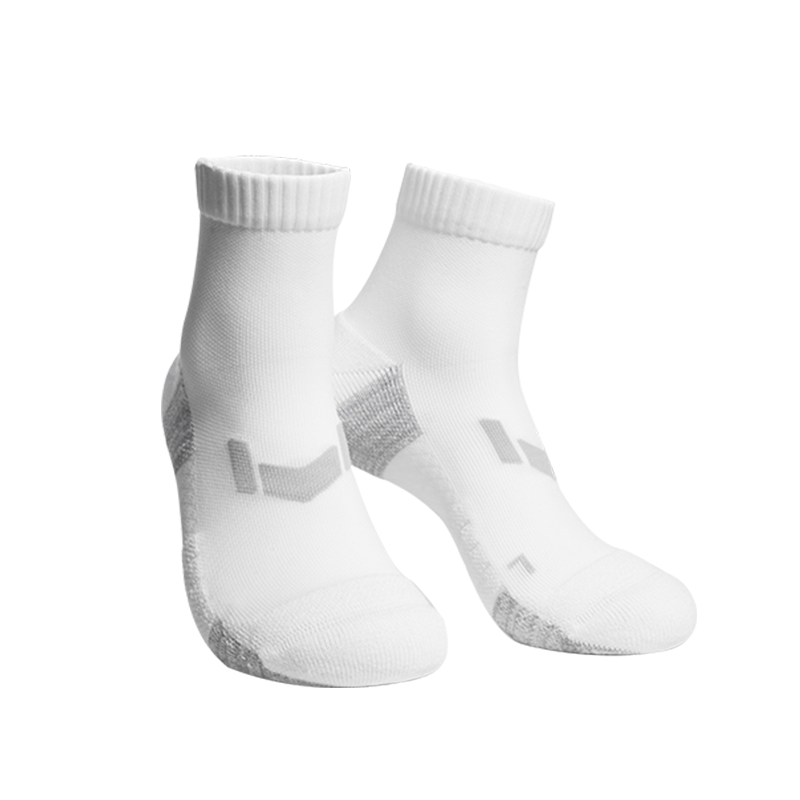
Fittergear Training Socks use COOLMAX® four-channel fibres that wick sweat and moisture away from the skin quickly. The heel and toe are terry for extra comfort, impact absorption and wear resistance. The knit is highly elastic, follows the arch of the foot without squeezing, and has an anti-slip design.
Short, mid-calf or long: which length for which session
The socks come in three lengths, in white or black, as one pair or two.
| Length | Key point | Best for |
|---|---|---|
| Short | Open ankle, coolest option | Running, treadmill, cardio, HIIT on hot days |
| Mid-calf | Covers the ankle so the shoe collar does not rub skin | General weight training, squats, machines, mixed sessions |
| Long | Sits higher, putting fabric between bar and shin | Deadlifts and any pull from the floor |
If you only buy one pair, choose for the session you do most. Runners go short, lifters who deadlift every week go long, and people who mix everything are best served by mid-calf. If you train most days, get at least two pairs so a fully dry pair is always ready.
Matching socks to your training
Deadlifts: wear long socks
In a conventional deadlift the bar should travel up in contact with your legs. Let it drift forward and the load shifts onto your lower back. Knurling scrapes shins, so many lifters push the bar away. Long socks remove that excuse.
- Pull long socks all the way up and smooth out any wrinkles over the shin.
- Stand with the bar over mid-foot, about an inch from your shins.
- Hinge down, grip the bar, and bring your shins forward until they lightly touch it.
- Brace, push the floor away, and let the bar slide up your shins and thighs to lockout.
Tip: if the bar keeps catching on the fabric, you are probably pulling it into yourself too hard. Think "slide", not "drag". If your shins are already scraped, let them heal before going heavy again.
Squats: mid-calf works
On squats the priority is a foot that stays put. A wet or baggy sock lets the heel lift or shift.
- Line the sock heel up with your actual heel, no twisting.
- Lace the shoe snugly across the mid-foot.
- Spread weight across heel, big toe base and little toe base.
- Descend under control and drive up feeling the whole foot gripping the floor.
Tip: on leg days that include both squats and deadlifts, just wear the long pair for the whole session.
Running and cardio: go short
Feet get hottest on runs. Short socks leave the ankle open to shed heat.
- Make sure the cuff still sits slightly above the back of the shoe so the collar does not rub your Achilles directly.
- Smooth the fabric at toe and heel before lacing up. Small creases become blisters on longer runs.
- For runs over 40 minutes or outdoor afternoon runs, carry a spare pair to change into afterwards.
HIIT and circuits: short or mid-calf
Jumps, lateral shuffles and quick direction changes move your foot around inside the shoe more than straight-line running. If the class includes burpees or kneeling work, mid-calf keeps your ankles off the floor; for pure jumping cardio, short socks run cooler.
- If your foot slides on direction changes, check whether the sock is soaked or too big before blaming the shoe.
- Keep a Fittergear Training Towel nearby. It is soft, breathable and made for fitness and running.
Getting the size right
Poor sizing makes feet slip. Check the size options on the product page against the shoe size you actually train in, and message the store if you are unsure. Then check the fit:
- The sock heel should sit on your heel. If it rides up the back of the ankle, it is too small; if it sags under the foot, it is too big.
- Toes should not be pulled into a curl, and there should be no spare fabric folding at the tip.
- The cuff should stay up between sets without leaving a deep mark.
Common mistakes
- Training in cotton socks. Cotton absorbs sweat but dries slowly, so it stays wet for the whole session.
- Deadlifting in no-show socks. Nothing between bar and shin, every rep.
- Re-wearing an unwashed pair. It may feel dry, but sweat stays in the fabric and odour builds faster each time.
- Sizing up "just in case". Extra fabric bunches in the shoe, which means slipping and rubbing.
Washing and care
- Turn socks inside out; sweat and skin build up on the inside.
- Wash cool or warm with a mild detergent, keeping whites and blacks apart.
- Go easy on fabric softener, which can coat fibres and reduce how well they move moisture.
- Air-dry in shade with good airflow; skip the tumble dryer and long hours in harsh sun.
FAQ
How are breathable training socks different from regular cotton socks?
Cotton holds sweat in the fabric and dries slowly. Socks made with fibres such as COOLMAX® are designed to wick sweat and moisture away from the skin, so your feet feel drier through the session.
Do I really need long socks for deadlifts?
It is not mandatory, but it helps. Fabric between bar and shin lets you keep the bar close, which is correct technique anyway. Some gyms and competitions also require long socks for deadlifts.
Can I run and then lift in the same pair?
For a short session, yes. If the run left them soaked, switch to a dry pair before squats and deadlifts so your feet stay stable. If you keep getting foot pain or blisters, rest and see a professional.