Beginners don't need a lot of gear. Four things are enough to get going: a big water bottle, a pair of training gloves, resistance bands and a foam roller. They all work at the gym and at home, they're affordable, and they make it easier to train consistently from week one.
The usual beginner problem isn't missing equipment; it's buying things you don't need yet and never using them. Below is what each item is for, which exercises to use it with, how to use it properly, and what can wait.
First decide where you'll train
- At a gym: machines and dumbbells are provided. You bring personal items: bottle, gloves, towel.
- At home: resistance bands do most of the work. Several resistance levels, little space, easy storage.
- Both: choose portable items that work anywhere, like bands and a foam roller.
If the goal is building a habit, start with what makes training comfortable and removes excuses. Specialist gear can come once you know what kind of training you enjoy.
Four essentials and how to train with them
1. Resistance bands for the whole body
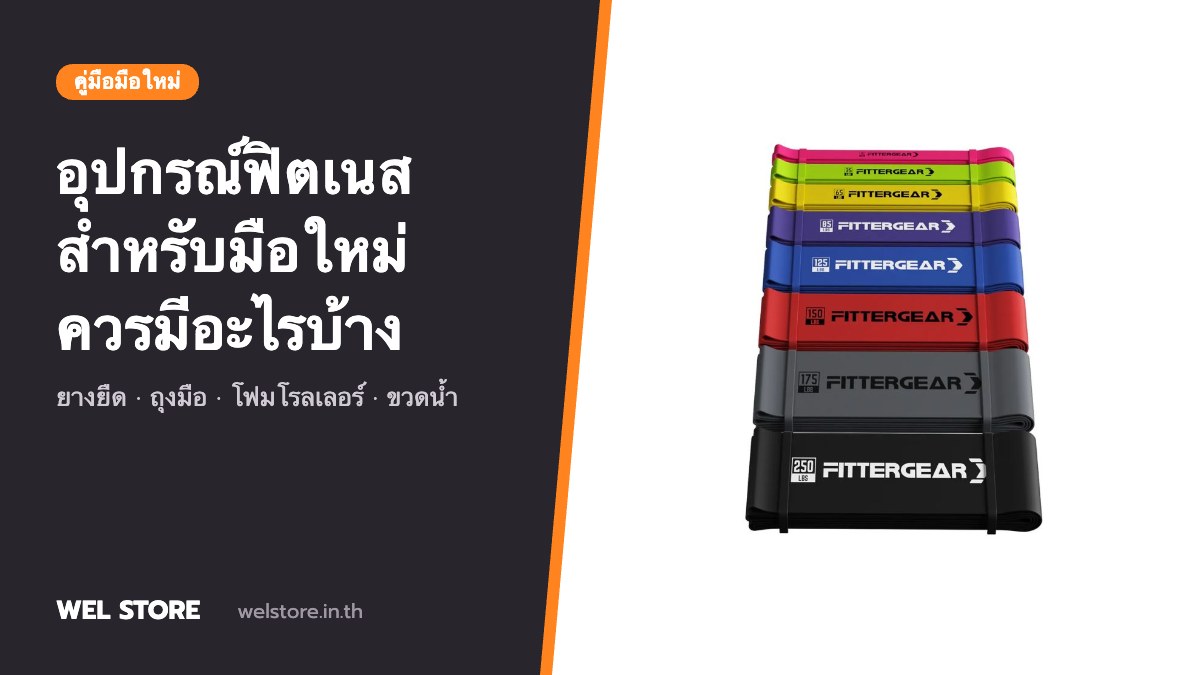
Fittergear Pro Bands come in 8 resistance levels and can add resistance or assist you. Start with a light to medium band.
- Band pull-apart (upper back, shoulders): hold the band at chest height, arms straight, and pull it apart until it touches your chest, squeezing your shoulder blades. 3 sets of 12-15.
- Band squat (legs, glutes): stand on the band, feet shoulder-width, other end across the front of your shoulders. Sit back and down, chest up, knees over toes, then stand. 3 sets of 10-12.
- Assisted pull-up: loop the band securely around a pull-up bar, put a knee or foot in the loop, grip slightly wider than shoulders and pull until your chin clears the bar. Lower slowly. Move to a lighter band as you get stronger.
Check bands for nicks or tears before every session, and never let them snap back.
2. Training gloves for grip and palms
New lifters doing lat pulldowns, dumbbell rows or hanging from a bar often deal with slippery hands and sore palms. Fittergear Training Gloves have a breathable mesh back, a foam and real leather palm, an adjustable wrist closure and terry cloth on the thumb for sweat.
- Sizing: measure palm width and check the size chart on the product page. They should fit snugly with no bunched fabric in the palm.
- Putting them on: push fingers all the way in and close the wrist strap firmly, not so tight your fingers go numb.
- Gripping: set the bar at the base of your fingers rather than the middle of your palm. It reduces skin folding and gives a firmer hold.
3. Foam roller for warm-ups and cool-downs
The Fittergear Foam Roller is medium-density, 15 cm in diameter and comfortable for beginners, before or after training.
- Calves: sit with legs straight, roller under your calves, hands behind you, lift your hips and roll slowly for 30-60 seconds per side.
- Quads: lie face down on your forearms with the roller under your thighs, and roll from just above the knee to the hip.
- Glutes: sit on the roller, cross one ankle over the other knee, lean toward the crossed side and roll gently.
Roll slowly, breathe normally, don't press so hard you tense up, and don't use it on your spine or neck. If pain doesn't go away, rest and see a professional.
4. A big bottle you'll actually drink from
Many beginners under-drink because the bottle is small or the water gets warm. The Blackube Drinkmore 1000 ml is a double-wall stainless bottle with a straw, keeps drinks cold for up to 28 hours and is leak-proof in your bag. Simple rule: sip after every set.

| Item | Key spec | Best for |
|---|---|---|
| Fittergear Pro Bands | 8 levels, natural latex | Home training, warm-ups, assisted pull-ups |
| Fittergear Training Gloves | Mesh back, leather palm, wrist strap | Pulling moves, dumbbells, machines |
| Fittergear Foam Roller | Medium density, 15 cm | Warm-ups, cool-downs, after runs |
| Blackube Drinkmore | 1000 ml, straw, up to 28 h cold | Gym, running, all-day use |
A sample first week with just this kit
- Day 1: full body: band squats, knee push-ups, band pull-aparts, 3 sets each; 5 minutes of foam rolling.
- Day 2: brisk walk or easy cycling, 20-30 minutes.
- Day 3: rest.
- Day 4: full body again, adding assisted pull-ups or lat pulldowns with gloves on.
- Days 5-7: light walking, stretching, rest.
What can wait
- Lifting belt: useful once squats and deadlifts get heavy. Learn the movements with light weights first.
- Wrist wraps or lifting straps: for when loads exceed your grip or wrist strength, which beginners rarely hit early on.
- Big, expensive equipment: wait until you know what you enjoy and can stick with it.
FAQ
Which band strength should a beginner pick?
One you can do 12-15 clean reps with, usually light to medium. For pull-up assistance, choose a heavier band since it supports your bodyweight.
Will gloves stop my grip getting stronger?
Gloves deal with sweat and friction; they don't weaken your grip. If you're concerned, do some sets without them or add dead hangs to your programme.
Should I foam roll before or after training?
Both work. Use it for 3-5 minutes as part of your warm-up, or during your cool-down to relax the muscles.