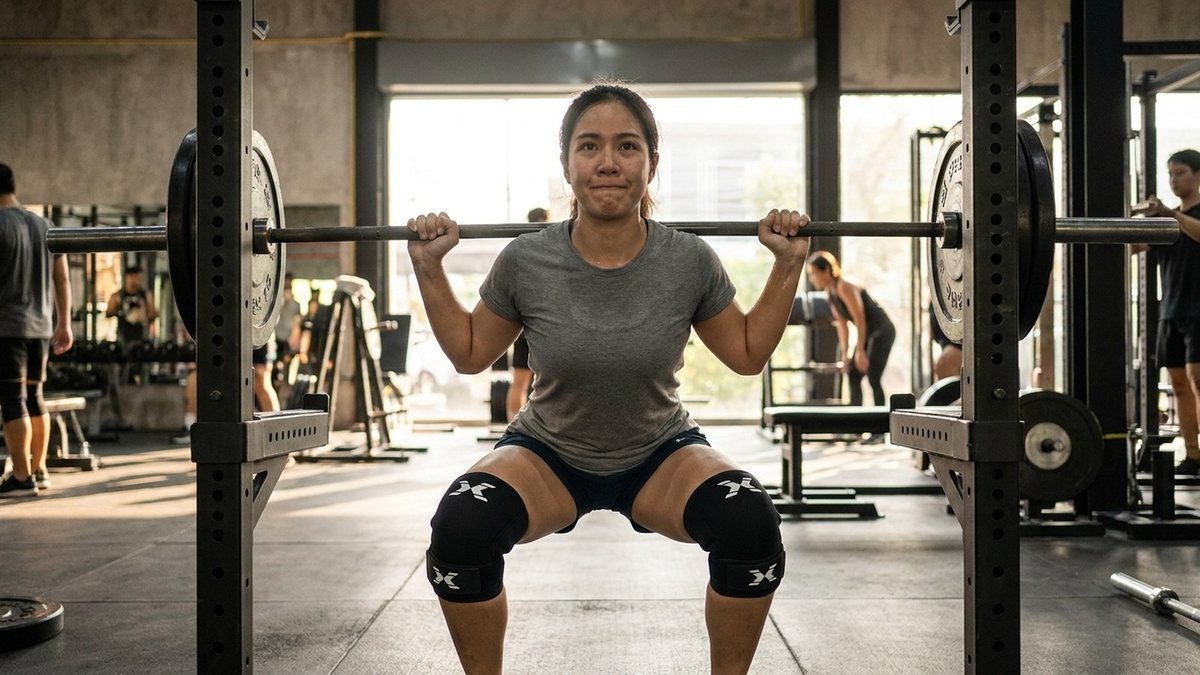
Knee sleeves are thick, stretchy sleeves that cover the whole knee joint. They add compression and keep the knee warm, which makes it feel more stable and gives you confidence in squats and leg work. They will not suddenly add kilos to your squat and they do not replace good technique, but they are standard kit on leg day for many lifters.
Here is what they do, how to put them on properly, which exercises they suit (with step-by-step cues), how to size them, and how they compare with a patella strap and elbow sleeves.
What knee sleeves do
- Warmth: the thick material holds heat so your knees do not cool down between sets, useful in heavily air-conditioned gyms.
- Compression: even pressure around the joint helps the knee feel supported and stable.
- Confidence and awareness: many lifters feel their knee position more clearly, which helps them keep good knee tracking.
Knee sleeves are not medical devices. If your knee hurts during or after training, stop, rest and see a doctor or physiotherapist before you load it again.
How to put knee sleeves on
- Sit on a bench with your leg mostly straight. For a pull-on sleeve, fold the top half down first; it slides on far more easily.
- Pull it up past the calf and centre it on the kneecap, with roughly equal material above and below.
- Unroll the top over your thigh and smooth out wrinkles behind the knee, which pinch at the bottom of a deep squat.
- On a Velcro model, fasten the strap after positioning: snug enough to feel the compression, loose enough to bend fully without numbness.
- Do 3–5 bodyweight squats. If the sleeve slides down, reposition it or consider a smaller size.
Numbness, tingling or colour change means it is too tight. Loosen or remove it, and feel free to loosen between sets.
Exercises to wear them for
Sleeves earn their place in movements with deep knee bend under load. Put them on once your warm-up sets get meaningful; you do not need them for the empty bar.
Back squat
- Set the bar on your upper back, grip slightly wider than shoulders, walk out two steps.
- Feet about shoulder-width, toes slightly out. Breathe in and brace.
- Bend hips and knees together, knees tracking over toes, to hip crease at or below the knee.
- Drive through the whole foot, chest up, to standing.
Mistake: knees caving on the way up, or wearing sleeves so tight they bounce you out of the hole instead of you owning the bottom position.
Front squat
- Rest the bar on the front of your shoulders with elbows high.
- Stay more upright than in a back squat and sit straight down; knees travel further forward.
- Go as deep as you can while keeping elbows up, then stand.
Mistake: elbows dropping so the bar rolls forward.
Lunges
- Hold dumbbells at your sides and take a long step forward.
- Lower straight down until the back knee nearly touches the floor, front knee in line with the toes.
- Push through the front heel to return, then switch legs.
Mistake: steps too short, and the back knee slamming the floor.
Leg press
- Sit with your back flat against the pad, feet mid-platform at shoulder-width.
- Release the safeties and lower until knees reach about 90 degrees, or just before your hips lift off the seat.
- Press up without snapping the knees locked.
Mistake: going so deep the lower back rounds off the pad.
Wall ball
- Stand an arm's length from the wall holding a medicine ball at your chest.
- Squat below parallel, then drive up and use that momentum to throw the ball to the target.
- Catch it and flow straight into the next squat.
Mistake: squats getting shallower as you tire.
Sizing
Both Fittergear knee sleeves are sized by calf circumference. Measure the widest part of your calf while standing relaxed: S 32.5–35 cm, M 35–37.5 cm, L 37.5–40 cm, XL 40–42.5 cm. Between sizes, go smaller for heavy squats and more compression, larger for long sessions or muscular legs. The Velcro strap lets you fine-tune afterwards.
Knee sleeves vs patella strap vs elbow sleeves
A patella strap is a narrow band worn just below the kneecap. It gives targeted pressure in one spot, is light and stays cool, which is why runners and jumpers like it. Sleeves cover the whole joint with warmth and all-round compression, so they suit squats and heavy leg work better. We stock the genuine-leather, adjustable Fittergear Patella Knee Strap, though stock is very limited; for lifting, sleeves are the main pick.
Elbow sleeves do the same job for your elbows on bench press, curls and clean and jerk. Fittergear Elbow Sleeves Pro are sized by arm circumference from S (27–32 cm) to XL (41–48 cm) and pair well with knee sleeves if you train both leg and pressing days.
Which Fittergear sleeve to choose
| Model | Size / key spec | Best for |
|---|---|---|
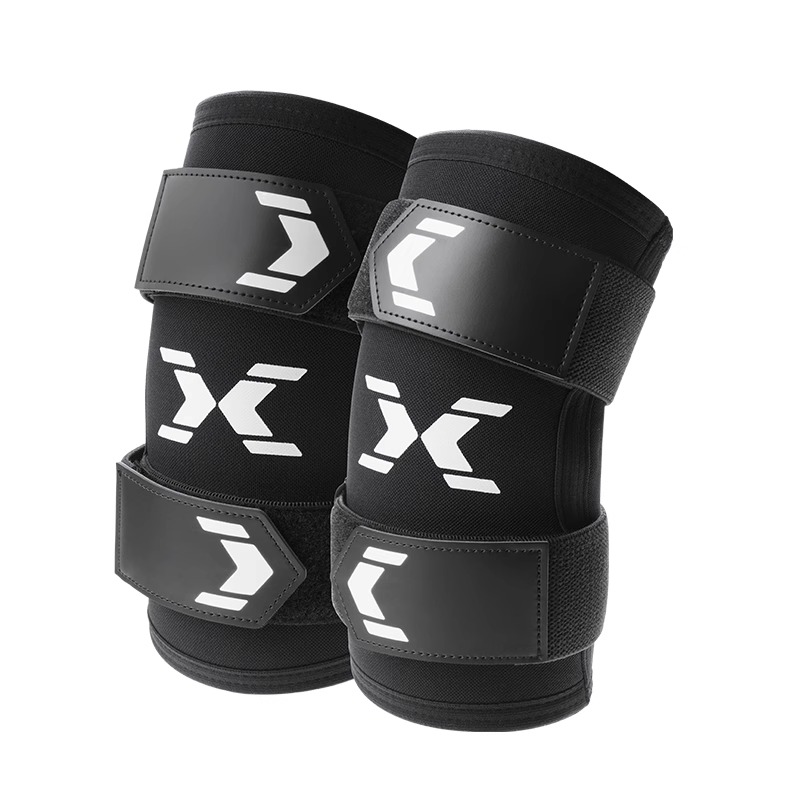
| Knee Sleeves (Pro) Velcro | S–XL by calf, SBR, adjustable strap | Squats, deadlifts, Olympic lifts |
| Knee Sleeves (Pro) 3D | S–XL by calf, 3D cut, breathable, quick-drying | General leg days, long hot classes |
| Elbow Sleeves Pro | S–XL by arm, adjustable fit | Bench press, curls, clean and jerk |
The Velcro model is the main choice for serious squatters: highly elastic SBR, a reinforced grooved band that spreads compression evenly, and a strap you can tighten to suit the day. The 3D model focuses on a close fit and breathability for varied leg sessions and functional classes.
FAQ
Should I wear knee sleeves for every set?
No. Many lifters put them on partway through warm-ups and take them off for exercises that do not bend the knee much.
Can I run in weightlifting knee sleeves?
You can, but thick sleeves are built for lifting and may feel hot on long runs. A lighter patella strap may suit running better.
How do I care for them?
Turn them inside out to air-dry after training. Hand-wash in cool water with mild detergent, fasten the Velcro first, and avoid strong sun or tumble dryers.