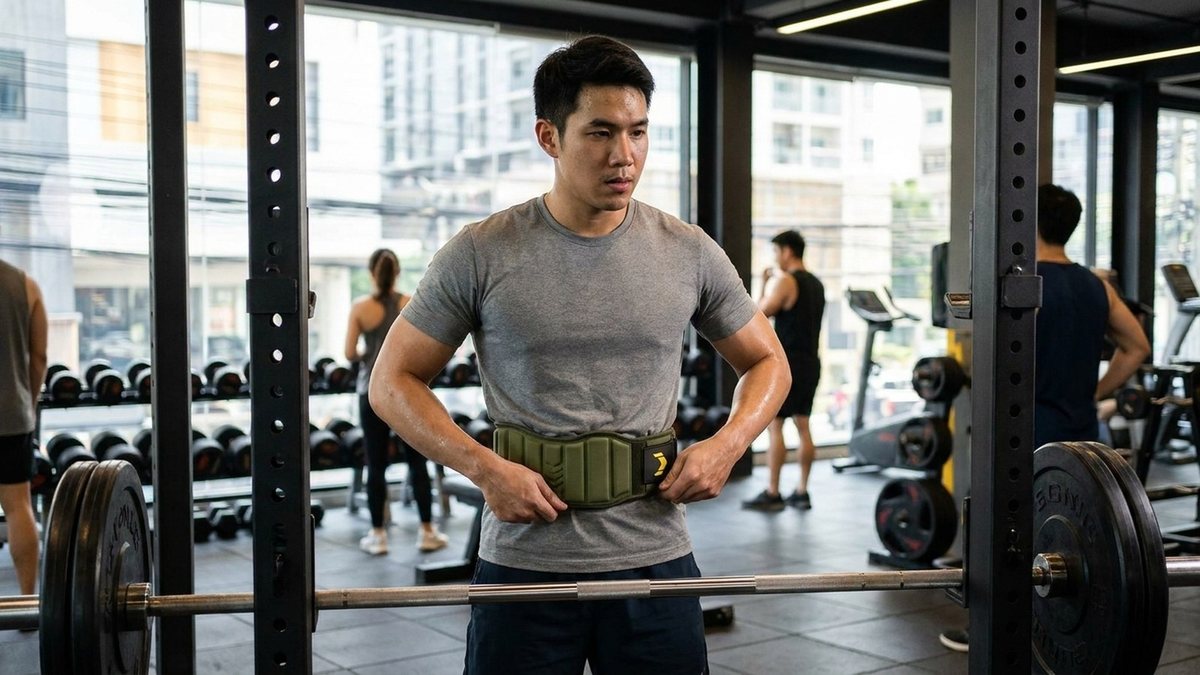
Wear a lifting belt for your heaviest sets of movements that load your torso: squats, deadlifts, overhead presses and heavy rows. Not from warm-up to cool-down. And more important than wearing it is knowing how to breathe and brace into it, because a belt only works when your midsection has something to push against.
This is not a guide to choosing a belt. It is about using one: where it sits, how tight, how to brace step by step, which lifts benefit, when to start wearing it and the mistakes that make a belt pointless.
How a lifting belt actually works
Under a heavy load you breathe into your belly and tighten everything around your trunk, turning it into a pressurised cylinder. The belt gives your abs and obliques a wall to push out against, so that brace feels firmer and more stable than bracing alone.
That means if you breathe shallowly into your chest or suck your stomach in, the belt does very little. The skill to practise is bracing, not cranking the belt as tight as it goes.
How to put it on and brace, step by step
- Position. Most lifters wear it between the bottom of the ribs and the top of the hips. Adjust slightly by lift; for deadlifts many people wear it a little higher so it does not dig into the thighs.
- Tightness. Stand tall, exhale normally and fasten it so you can still slide a flat hand between belt and stomach. If you cannot breathe into it, it is too tight.
- Breathe low. Inhale through the nose into your belly and sides, not your shoulders. Feel your waist expand into the belt front, sides and back.
- Brace and hold. Tighten as if about to take a punch and hold that breath through the descent and the start of the drive.
- One rep at a time. Exhale once past the hardest point, take a fresh breath at the top and re-brace before the next rep.
If you have high blood pressure or another medical condition, talk to your doctor before practising breath-holding under heavy loads.
Tip: practise bracing beltless on warm-up sets first, then put the belt on for heavy sets. The difference is easy to feel.
Lift-by-lift technique
Squat
Belt on before you step into the rack. Set the bar, breathe, brace and unrack. Re-brace before each descent, keep pushing your belly into the belt on the way down and do not leak air at the bottom, where you need to be tightest.
Deadlift
You have to hinge down to the bar, and a belt worn too low will jam into your thighs. Try it slightly higher, grip the bar, breathe, brace and pull the bar close to your legs. Set the bar down between reps and re-brace each time.
Overhead press
Standing presses benefit too: the brace helps stop you leaning back as the bar goes up. Breathe in, squeeze your glutes, press straight up and exhale once the bar is locked out overhead.
Heavy rows
Standing bent-over rows require you to hold a hinged torso for the whole set. Belt and brace keep you still so you do not heave the weight. If you have to swing to get it up, it is too heavy.
When to start wearing it, and for how many sets
- Warm-ups and light sets: no belt. Use them to practise bracing on your own.
- Sets heavy enough that you can only manage around five reps, or where holding your torso position gets hard: this is where a belt starts to help.
- Main lifts only. On leg day, belt up for squats; accessories like leg press and leg curls do not need it.
- Loosen it between sets and re-fasten before the next one.
If you are only a few months into lifting, focus on technique and beltless bracing first, and add the belt when the weights start to make your torso hard to control.
Mistakes that make the belt useless
- Too tight, so you cannot breathe into it.
- Wearing it all session, which is uncomfortable and robs you of practice bracing on your own.
- Sucking in. Pulling your stomach in is the opposite of bracing.
- Wrong position, pressing into the ribs or jamming the thighs.
- Using it instead of form. A belt adds trunk stability; it does not fix a rounded back or a drifting bar.
If your back hurts during or after training, stop, rest and see a professional.
Which of our belts to use
| Model | Closure / key spec | Best for |
|---|---|---|
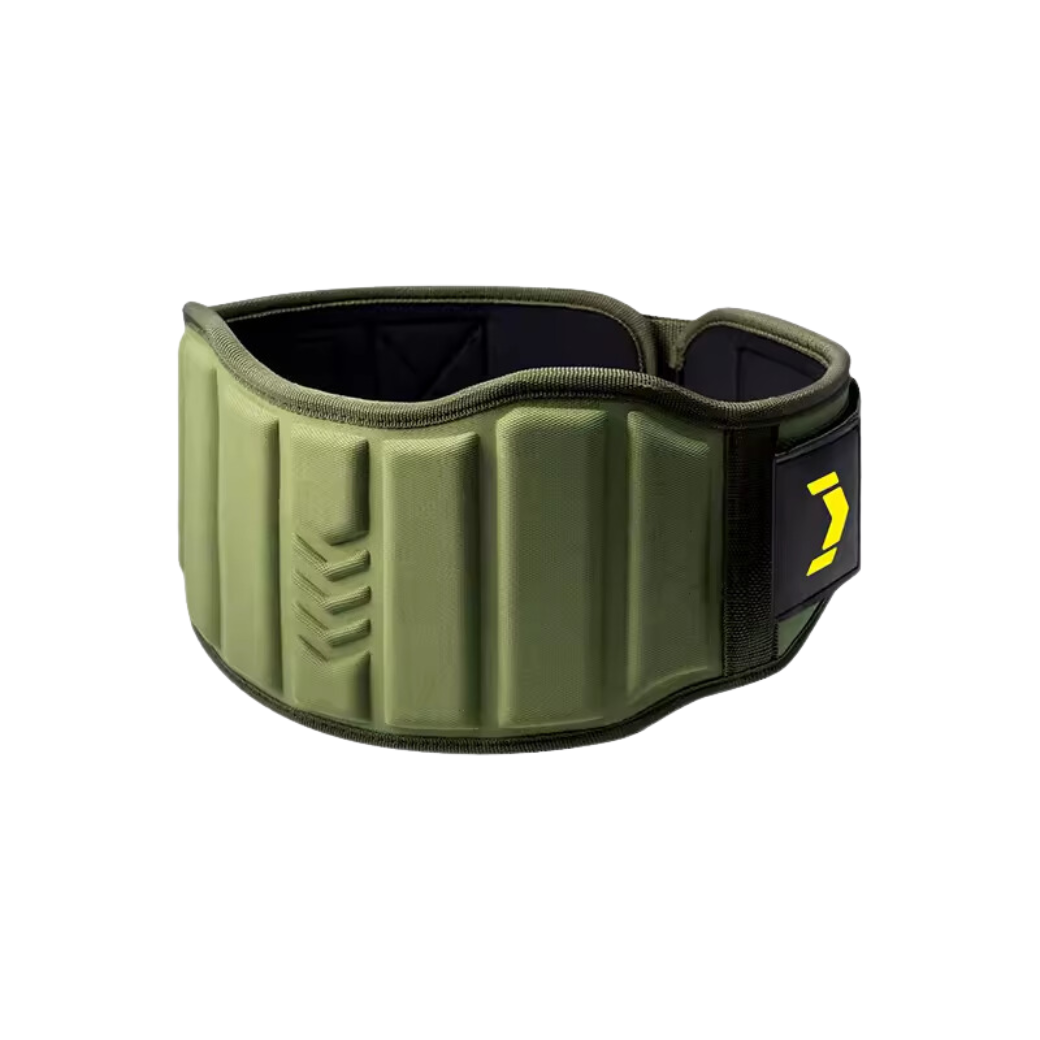
| Training Belt (hook & loop) | Wide belt, waterproof foam core, brushed lining, hook-and-loop; S M L | Mixed sessions: squats, deadlifts, rows and presses |
| Powered Armor Belt | Self-locking buckle, mesh top layer; S M L | Quick on and off between sets |
| Power of Dragon | 10 cm wide, zinc alloy buckle, cotton padding; S to XL by waist | Heavy deadlifts and squats |
| Heroine Power | Designed for women, locking buckle; XS S M | Women training squats, deadlifts and jerks |
If your week includes squats, deadlifts, rows and overhead presses, the hook-and-loop Training Belt is the easy all-rounder; its product notes specifically mention standing bent-over rows and overhead presses as well as leg work. If you unclip between every set, the Powered Armor Belt's self-locking buckle is quicker. Heavy pullers wanting a 10 cm width should look at the Power of Dragon, and women can start with the Heroine Power.
FAQ
Will a belt make my core weaker?
Not if you only wear it for heavy sets and train lighter sets without it. Bracing hard into a belt still works your trunk muscles; problems start when you belt every set and never learn to brace on your own.
Should I wear it for cardio or machines?
No need. Save it for heavy sets of lifts that load the torso, like squats, deadlifts, presses and rows.
How tight should it be?
Fasten it after a normal exhale so a flat hand still fits underneath and you can breathe into it. If you cannot inhale into your belly at all, loosen it.