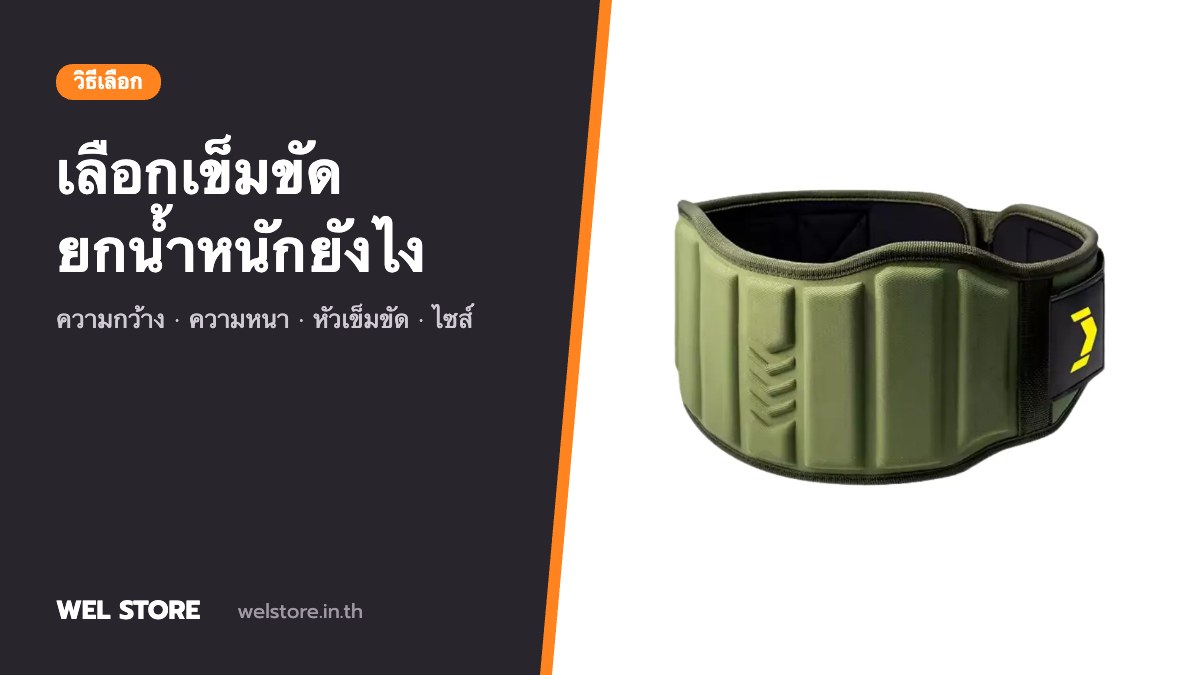
To choose a lifting belt, look at four things: width, thickness and material, buckle type, and waist size. If you focus on heavy squats and deadlifts, go for a stiff leather or wide belt. If you train lots of different lifts and want something quick to put on and take off, a hook-and-loop or self-locking belt is more practical.
The best belt isn't the thickest one; it's the one that suits your lifts and your build. Here's each factor in turn, with Fittergear's belts compared side by side.
1. Width
Width decides how much of your torso the belt supports. Wider belts cover more and feel more solid; narrower or tapered belts let you move more freely.
- Uniform width around 10 cm: popular for powerlifting, squats and deadlifts. The Fittergear Power of Dragon is 10 cm wide.
- Wide back, tapered front: easier to bend and hinge in; suits smaller lifters or shorter torsos.
- Short torso? If a wide belt digs into your ribs or hip bones, go narrower.
2. Thickness and material
- Leather: strong and holds its shape; good for regular heavy lifting, though it can feel stiff until it breaks in. The Fittergear Leather Weight Lifting Belt is three-layer leather, 0.6 cm thick, aimed at squats and deadlifts. The Power of Dragon uses recycled leather, genuine leather and PU in a multi-layer strap with a padded cotton back.
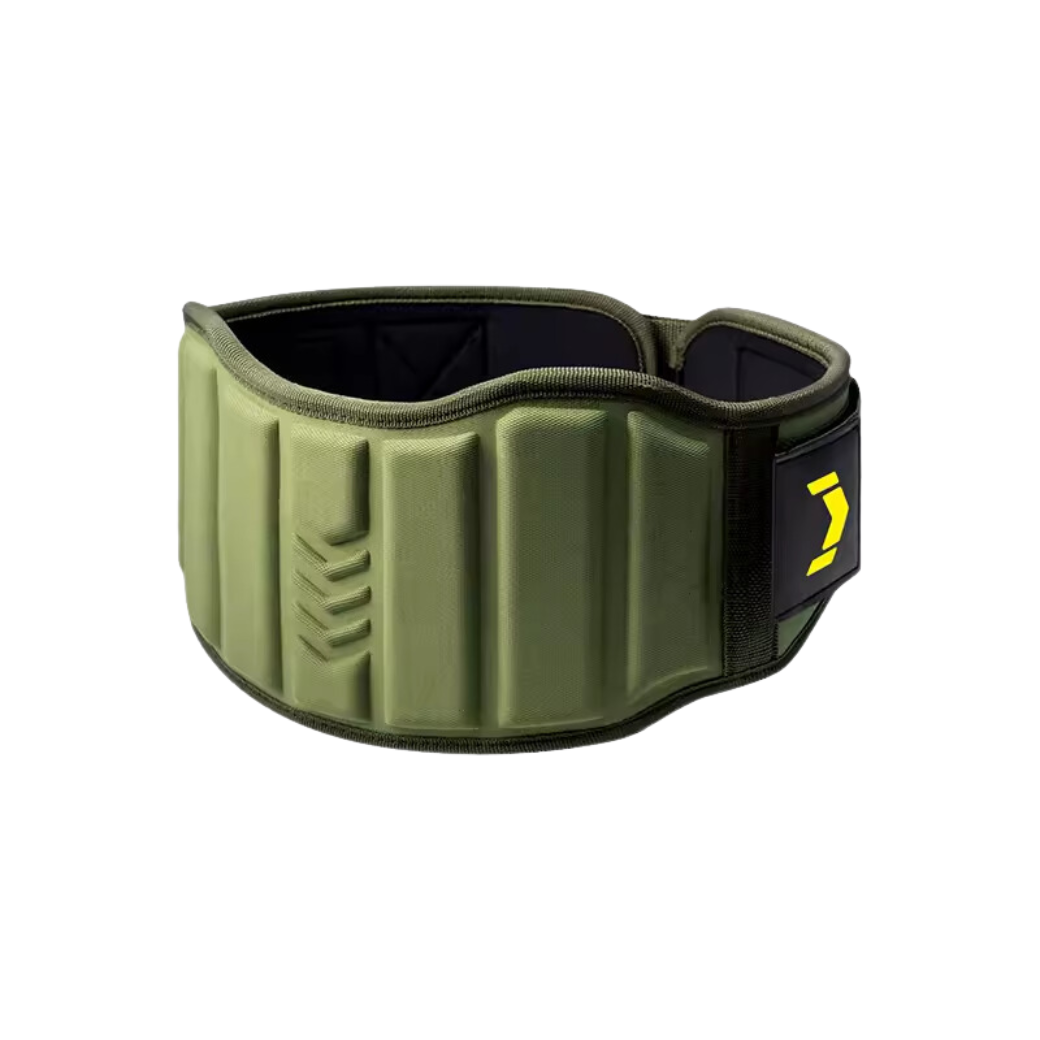
- EVA foam and fabric: light, flexible and comfortable; great for general training and first-time belt users.
- Rule of thumb: the heavier you lift on the main lifts, the stiffer the belt you'll want. Lots of varied movements in one session favour a more flexible belt.
3. Buckle types
- Hook and loop: fine-grained adjustment and fast on/off between sets. The Fittergear Training Belt pairs it with a low-profile ring, a waterproof foam core and soft lining, and works for squats, lunges and deadlifts through to standing rows and overhead presses.
- Self-locking buckle: adjusts to your waist and locks itself so the belt doesn't pop open mid-lift. The Fittergear Powered Armor Belt uses this, in EVA and polyester with a mesh top layer.
- Prong buckle: holes at set intervals, common on leather belts. Very secure, but you can only adjust hole by hole.
- Lever buckle: locks tight and releases fast, but needs a tool to readjust when your waist changes.
4. Getting the size right
- Measure your waist where the belt will actually sit, around navel height, not your trouser size.
- Measure in the clothes you normally train in.
- Check each model's chart. The 0.6 cm leather belt runs S 70-86 cm, M 86-100 cm, L 100-110 cm; the Power of Dragon runs S 66-81 cm up to XL 95-113 cm, with no need to size up.
- Between sizes? Consider how finely the belt adjusts; hook-and-loop and self-locking designs are more forgiving.
| Model | Key spec | Best for |
|---|---|---|
| Training Belt (hook and loop) | Waterproof foam core, hook-and-loop, S-L | General weight training, frequent on/off |
| Powered Armor Belt | Self-locking buckle, EVA, mesh top | Beginner to intermediate squats and deadlifts |
| Leather Weight Lifting Belt | Three-layer leather, 0.6 cm thick | Squats and deadlifts as loads get heavier |
| Power of Dragon | 10 cm wide, zinc alloy buckle, cotton padding | Heavy lifting, powerlifting |
| Heroine Power | Designed for women, XS-M | Women's squats, deadlifts and jerks |
How to wear it and which lifts to use it on
- Position: between your lower ribs and hip bones. Shift it slightly until it doesn't dig in at the bottom of a squat.
- Tightness: snug, but you can still take a deep breath. A flat hand should just slide between belt and belly.
- Before each rep: breathe deep into your belly and brace outward into the belt, then start the lift.
- Which lifts: heavy sets of squats, deadlifts, standing overhead press and bent-over rows.
- Warm-up sets: leave it off and let your trunk do the work; put it on for heavy sets.
- Between sets: loosen it, then re-tighten before the next set.
Common mistakes: so tight you can't breathe, or so loose it does nothing; wearing it all session including for leg extensions or curls; using it instead of fixing technique; choosing by trouser size.
A belt supports and stabilises your trunk, but it doesn't make injury impossible. If your back hurts during or after lifting, stop and see a professional.
Belts for women
Many women find even the smallest standard size too loose, or the belt too wide for their torso. The Fittergear Heroine Power is designed specifically for women, in XS, S and M, mainly EVA with 3D back support and a special locking buckle, for squats, deadlifts and jerks.
FAQ
When should a beginner start using a belt?
Once your squat and deadlift technique is solid and you're lifting loads that are heavy for you. While learning with light weights, you don't need one.
Leather or foam?
For regular heavy work on the main lifts, leather is stronger and holds its shape better. For varied training and quick, comfortable use, go foam with hook-and-loop or a self-locking buckle.
How do I look after my belt?
Wipe leather belts with a damp cloth after use; don't machine wash, soak or dry them in strong sun. The hook-and-loop Training Belt can be hand washed and air dried.